Product Overview
This is a polymeric sealant cream built for two surfaces at once: painted panels and paint protection film. It goes on as a soft cream, spreads into a thin even film and is wiped off after a short haze, leaving a slick reflective layer rather than a heavy coat that has to be buffed hard.
Detailers reach for it at the end of a job, once the paint has been washed, decontaminated and, where needed, corrected. Film installers use it on finished protection film to bring back the gloss and water behaviour a customer expects from a new install. On both surfaces the polymer base does the same work: it spreads evenly, settles into the fine texture that dulls a panel under shop lights, and stays on the surface as a protective layer.
The formula is aimed at film as much as at paint, so clarity is part of the brief. A coated film should still read as transparent after the coat is wiped, not milky or patchy, which is why the product is used on clear film as well as on clearcoat.
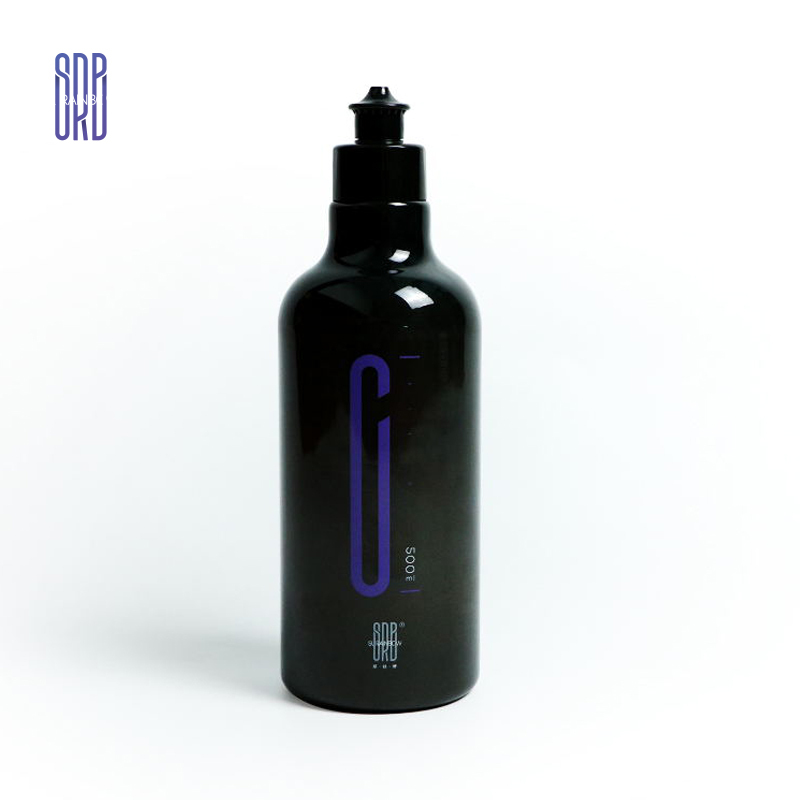
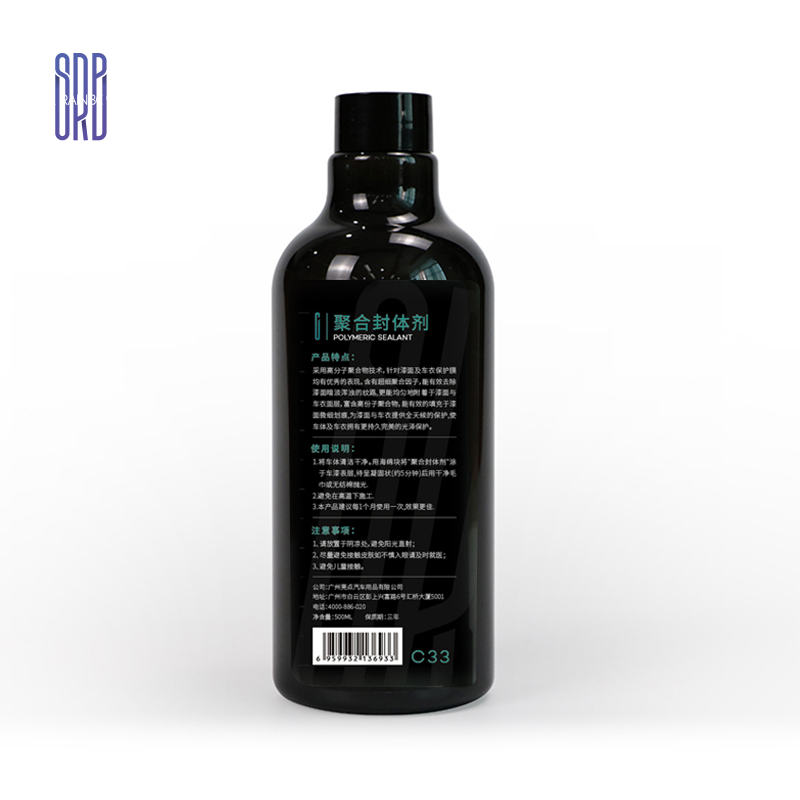
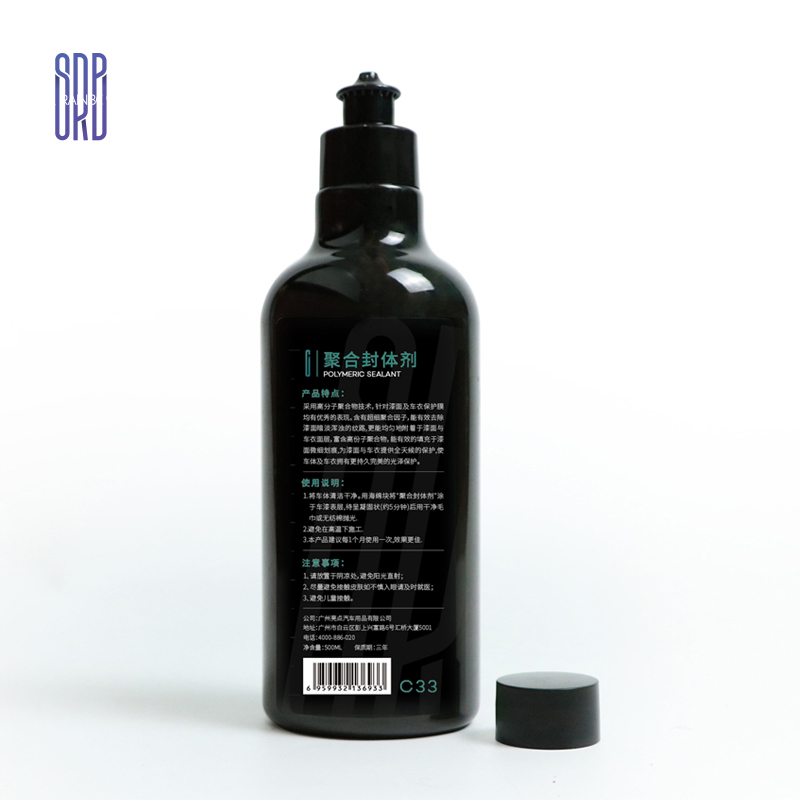
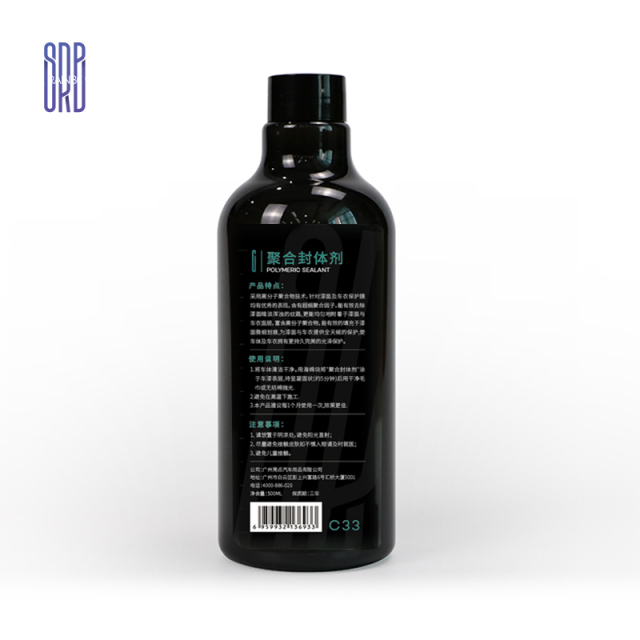
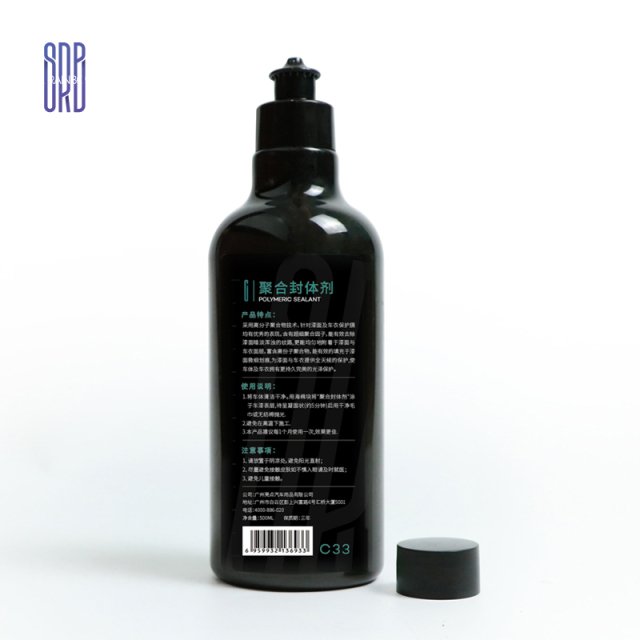
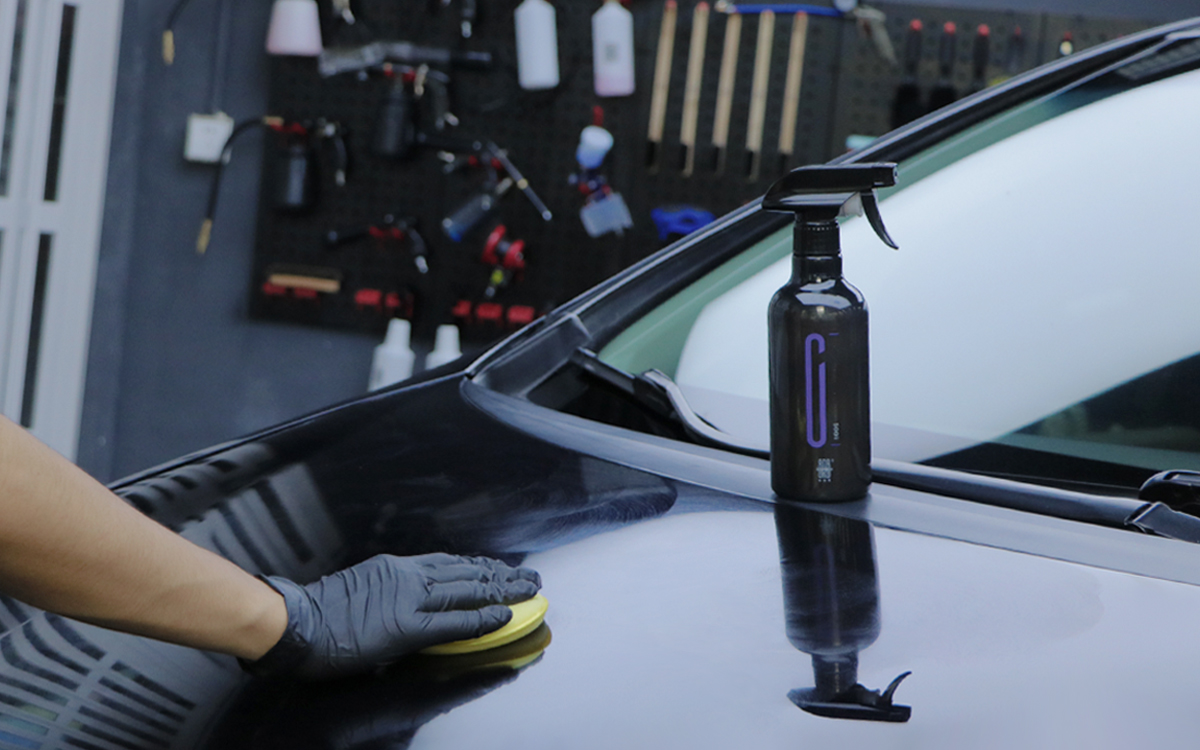
It arrives as a black screw-cap bottle labelled Polymeric Sealant, ready to use straight from the bottle. One product serves both the hand applicator pad and the pneumatic waxer in the bay, so a shop does not have to stock two different toppers for paint and film work. We produce it in Guangzhou as a car wax manufacturer supplying detailing chains, distributors and private-label brands.
- Two surfaces, one bottle: formulated for painted panels and for paint protection film, so a film shop can top up an install with the same product it uses on paint.
Polymer fill and gloss: ultrafine polymers settle into the fine marks and surface texture that dull a panel, so the finish reads smoother and glossier after wipe-off, with no abrasive action involved.
A wax for cars that behaves like a sealant: it lays down a protective layer that holds up against weather and washing, and it wipes away clean instead of smearing or leaving a greasy film.
Even, controllable spread: the cream holds its shape on the pad, stays where it is placed, and does not run down a vertical panel the way a liquid car wax does.
Machine or hand: runs on a pneumatic waxer with a wax plate for production work, or on a foam pad in a bay with no air line. - Long lasting car wax expectations, set honestly: we recommend a fresh maintenance coat about once a month to keep the slickness and beading consistent. Between coats the layer keeps protecting, but this is a maintenance product, not a permanent coating.
Application Steps
- Wash the car and dry it properly, then remove tar, iron fallout and any old wax residue. A long lasting car wax bonds to whatever surface it is given, so a clean panel is the first requirement for a coat that lasts.
- Inspect the paint under a swirl finder. If defects are still present, correct them first: this is a protective sealant, not a car wax and polish in one step.
- Work out of direct sun and let the panel cool. A hot bonnet or roof makes the cream flash too fast and wipes off unevenly.
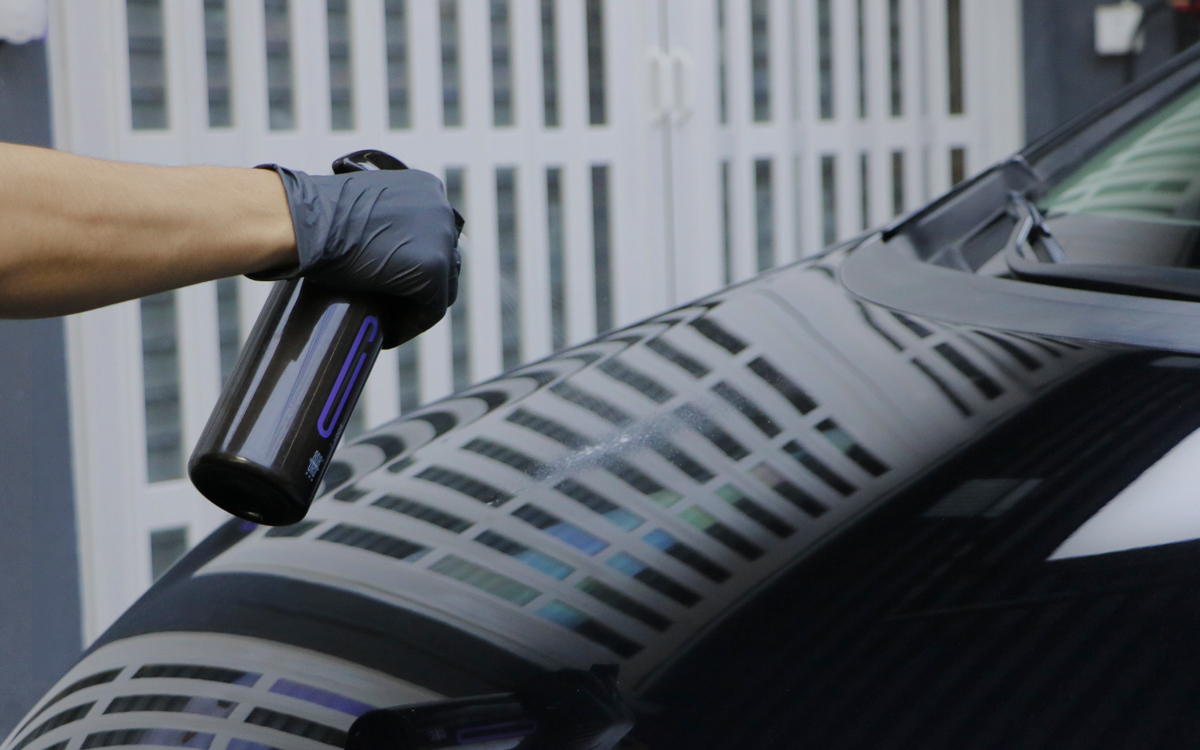
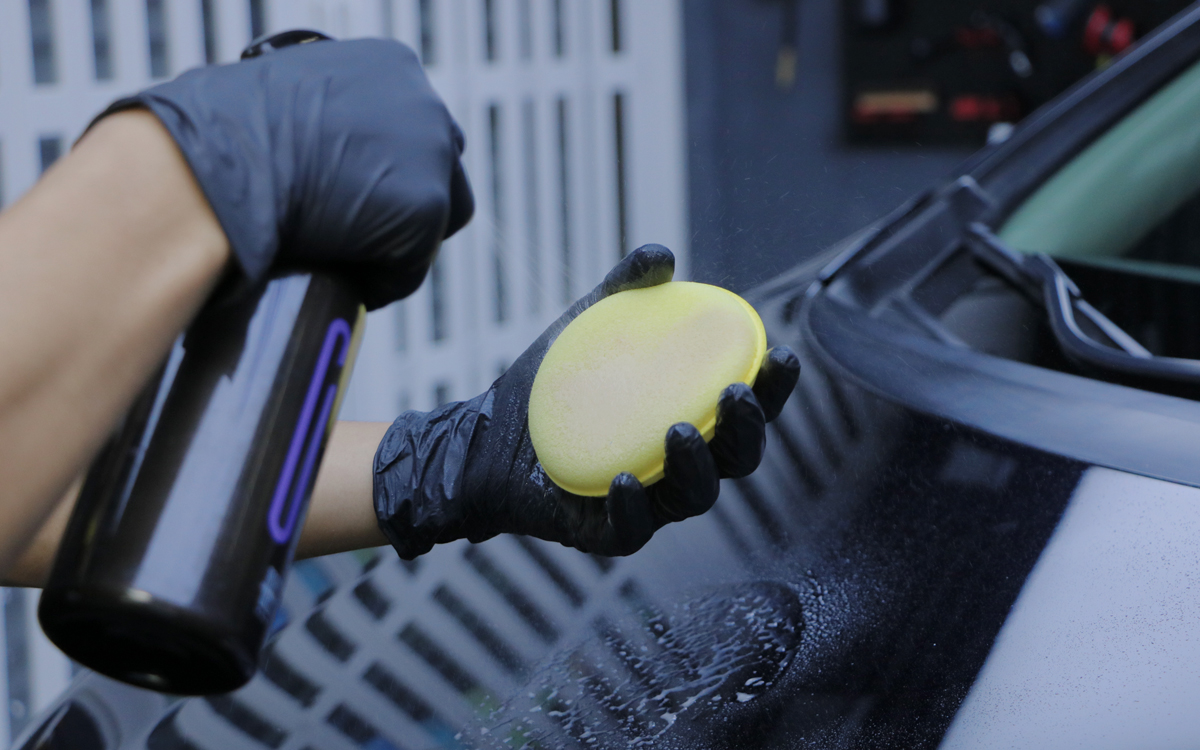
- Squeeze the cream onto the wax plate or a foam pad. A thin line is enough for a full panel, and nothing needs to be mixed or diluted.
- Spread it panel by panel with the pneumatic waxer, or by hand in overlapping passes, keeping the film thin and even and working up to edges and panel gaps.
- Let it haze. Label guidance is about five minutes, until the wet look disappears; in a cold or humid bay it takes longer, so judge by the surface rather than the clock.
- Wipe off with a clean microfiber towel or a non-woven cloth, turning to a dry face often, then finish with a second dry towel for the last of the gloss.
Surfaces & Compatibility
- Painted panels: solid colours, metallics and clearcoat all take it the same way, with no separate primer or activator.
- Paint protection film: the formula is aimed at film as well as paint, so a finished clear film job can be topped up without clouding the film.
- Gloss vinyl and gloss wraps: treat these like paint and follow the wrap maker's care advice; the product is described for paint and protective film, so confirm suitability for a specific wrap system before running it across a whole vehicle.
- Matte, satin and textured finishes: test a small hidden area first. Residues show up on non-reflective surfaces, and a matte finish gives nowhere to hide a patchy coat.
- Keep it off plastic, rubber and glass: trim, seals, window rubbers and glass are not the target surface, and the label advises avoiding them.
- Versus a liquid car wax: a cream stays where it is spread, which makes a thin even film easier to hold on a vertical panel and keeps drips out of panel gaps and badge recesses.
- Where it earns its keep: daily drivers in a maintenance program, show cars before handover, new film installs, and a car care wax top-up at the end of a maintenance wash.
Detailing Sequence
- After correction, not before: the sealant goes on once compounding and finishing steps have been wiped down. Applied over uncorrected paint, it simply locks the defects under the layer.
- After wash and decontamination: a car wax spread over bonded iron or tar will not sit evenly, and every defect shows through the gloss.
- Before handover: this is the last step of a full detail, the one that gives the customer the slick feel and the water behaviour they notice first.
- On finished protection film: a maintenance coat keeps the film slick and clear. Apply it once the film is ready for its first wash and top-up according to the film maker's own guidance.
- Not a substitute for a coating: where a car is booked for a ceramic or graphene coating, this is not the base layer. It is the wax for cars that come back for a monthly or quarterly top-up.
- Between services: a maintenance wash that ends with a fresh coat keeps a repeat customer's vehicle looking detailed all year and gives the bay a reason to rebook.
Specifications
| Product | Polymeric sealant cream for paint and paint protection film |
| Product code | C33 |
| Form | Ready-to-use cream |
| Base technology | Polymer |
| Net content | 500 mL |
| Shelf life | 3 years |
| Application | Pneumatic waxer with wax plate, or foam pad by hand |
| Haze time | About 5 minutes before wipe-off |
| Wipe-off | Clean microfiber towel or non-woven cloth |
| Surfaces | Painted panels and paint protection film |
| Storage | Cool place, out of direct sunlight |
| Container | Black screw-cap bottle |
Safety, Storage & Handling
Treat the bottle like any other professional chemical in the bay. Keep the cap closed between panels so dust and grit stay out of the cream, and stand the bottle upright on the shelf or in the van. Store stock in a cool place away from direct sunlight, and do not leave cartons in a hot container or against a sun-facing window through the summer.
Application heat matters as much as storage. Work in shade on a cool panel; applying under direct sun or on a hot bonnet makes the cream flash unevenly and the wipe-off streaky. Keep the product away from plastic and rubber trim, and if it does touch a seal or a textured bumper, wipe it off straight away rather than letting it dry on.
Handle it away from the eyes and keep bottles out of reach of children. If product gets into the eyes, rinse and seek medical attention. Wash hands after a session, and keep the working area ventilated as you would for any liquid car wax or sealant. When cartons move to a wholesale account, keep them upright and shaded so the stock arrives in the condition it left in.
Sampling & Sample Approval
- Send the brief: the surface you will test on, whether that is paint, film or both, the application method your team uses, and the result you expect to see.
- We prepare the sample and confirm the sample scope and courier arrangements with you before dispatch, so both sides know what is being evaluated.
- Run the test on a prepared panel: clean it, correct it if needed, then apply, haze and wipe exactly as your production team would on a customer car.
- Record what you approved, including the panel, the pad or wax plate used, the haze time in your own bay and the wipe-off routine.
- Seal the approved panel or bottle as the bulk reference. As a car wax manufacturer we produce against that sealed reference, not against a verbal description.
- Approve the packaging at the same time, so the formula and the finished bottle are signed off together rather than in two separate rounds.
- Packaging is approved together with the formula, because a bottle that looks right on a screen and wrong on a shelf costs a selling season. We review the bottle and closure, the label artwork, the carton and the shipping marks as one set, then send proofs for your written sign-off before bulk production begins. For own-brand orders, send your artwork files, label copy, barcode data and any hazard or warning panels your market requires. Label language and claims are reviewed together with the product details so the approved version can be controlled through production. The importer still confirms market-specific registration and labelling obligations for the destination country. Carton configuration is part of the same approval. Tell us how the bottles should be packed, how many units per carton you plan for, and whether cartons need your own marks or a neutral print. Car wax wholesale buyers often consolidate several items into one shipment, so carton dimensions and marks are agreed early to keep the load plan simple. Keep the signed proof and a production sample on file. If the label changes later, treat it as a new approval rather than an amendment to an old one.
Ordering, Payment & Shipping
- Order confirmation: product, pack size, quantity, label version and destination are written into the order confirmation before production is scheduled.
- Minimum order: the minimum for this sealant depends on pack size, label version and whether the order runs under your brand, and it is confirmed in the quotation for that exact combination.
- Payment and release: the balance is settled against the pre-shipment confirmation, then the goods are released for dispatch and the shipping documents follow.
- Shipping: In stock and fast shipping on standard SURAINBOW packs. Larger or custom-printed orders move on the schedule agreed in the quotation.
- Methods: sea, air or courier, agreed against destination, volume and the Incoterm you prefer.
- Documents: commercial invoice, packing list, SDS and CoA, with GHS label information where the market needs it. Confirm the exact document set for your destination at quotation.
- Carton marks and consignee details: checked before dispatch so handover and customs clearance stay clean, particularly on car wax wholesale orders that combine several items in one container.
After-Sales & Batch Traceability
Every bottle carries a batch reference, and that reference is the fastest route to an answer. Production and inspection records are kept for each batch alongside retained samples, so a question can be checked against the same reference that was approved before the order shipped. If something arrives wrong, tell us quickly. Report packaging, leakage or shortage within 7 days of receipt, and product quality concerns within 30 days. Send the order number, batch number, affected quantity, clear photos or video, and a short description of how the product was stored and used. The batch is then compared against the approved sample and the agreed specification, and the outcome is confirmed in writing. For car wax wholesale accounts, agree a simple record sheet with your sales contact: which batch went to which customer, and when the order was received. If a claim comes back from a detailer weeks later, that record turns a vague complaint into a traceable case.
Scale & Supply Capability
SURAINBOW is run by Guangzhou Liangdian Automotive Supplies Co., Ltd., a factory-trade operation set up in Guangzhou in 2010 and now 50 people strong. Sixteen years in car care have given us a one-stop supply position: our own SURAINBOW lines are held in stock for fast shipping, and an associate factory with modern production equipment and an established quality management system keeps replenishment moving. We take OEM and ODM work and our R&D team develops to your specification. Buyers in the Middle East, the United States, Southeast Asia, Europe, the UK, Russia, Africa and Australia already order from us.
FAQ
Is this a wax, a sealant or a polish?
It is a protective sealant wax. It goes on after correction to protect the paint and add gloss, and it works on the fine texture of a panel by filling rather than cutting. If you need a car wax and polish in one bottle to remove defects, that is a different step: correction comes first, then this coat.
Can it be used over paint protection film?
Yes. The formula is built for paint and for clear protection film, and the aim on film is clarity, so a wiped coat should leave the film transparent rather than milky. It is a wax for cars and film jobs alike, which is why film shops keep it as a finishing and maintenance product.
How often should the car get a fresh coat?
The label recommends approximately once a month for optimal results. Treated as a maintenance product, a long lasting car wax expectation is realistic: the layer keeps protecting between coats, while the slickness and beading are what a monthly top-up restores.
Can we apply it by hand without a pneumatic waxer?
Yes. Use a foam applicator pad, keep the film thin and even, let it haze and wipe it off with a clean microfiber towel. The machine route with a wax plate is faster across a full vehicle, but a hand-applied car care wax coat reaches the same finish on a single panel or a small job.
Will it mark plastic trim or rubber seals?
It can, which is why the label advises keeping it off plastic and rubber parts. Mask or simply work carefully around trim, and wipe any accidental contact straight away instead of letting it dry. Wipe-off towels that have picked up cream should not be used on textured plastics.
Does it suit matte wraps or satin film?
The intended surfaces are painted panels and clear protection film. On matte, satin or textured finishes, test a small hidden area first and check the result after it cures, because residue shows up on non-reflective surfaces. If you need a product for a full matte wrap program, confirm the requirement with your sales contact before ordering.