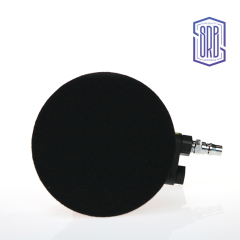
Product Overview
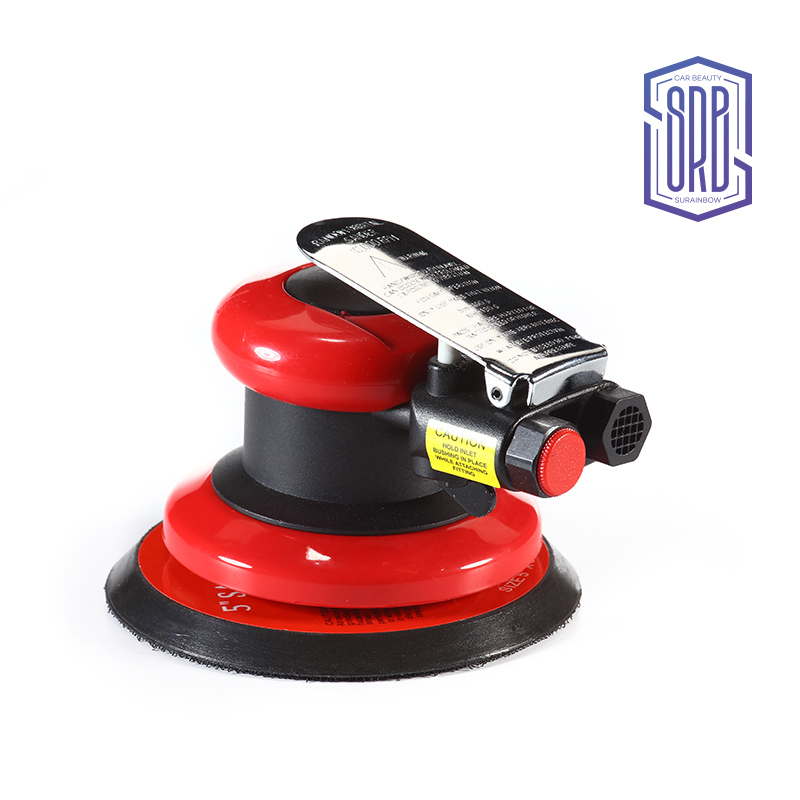
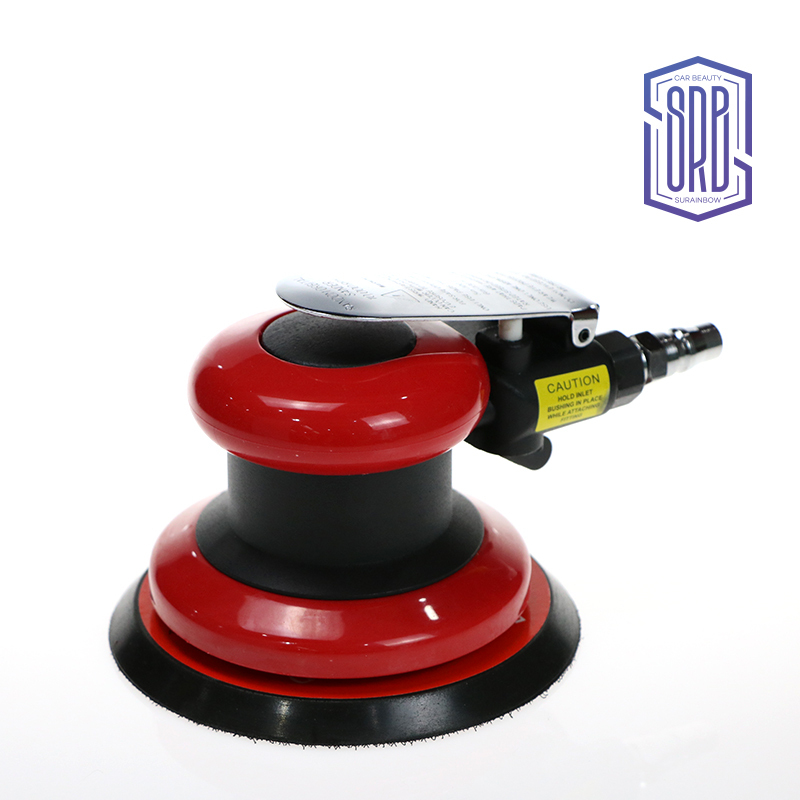
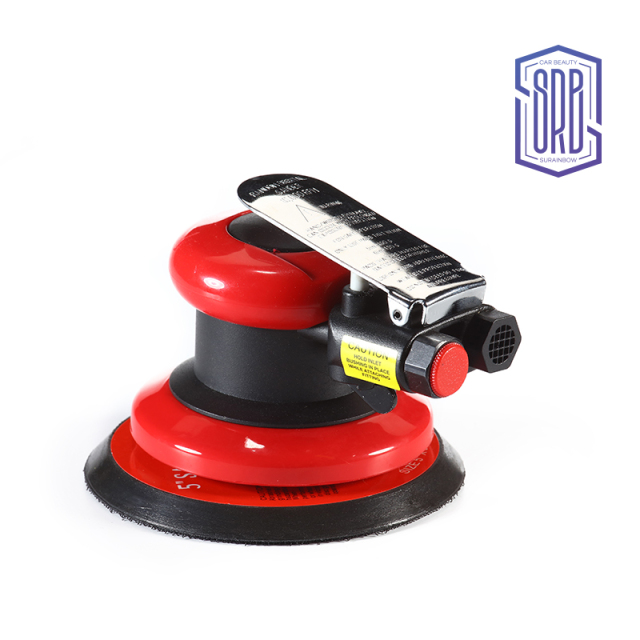
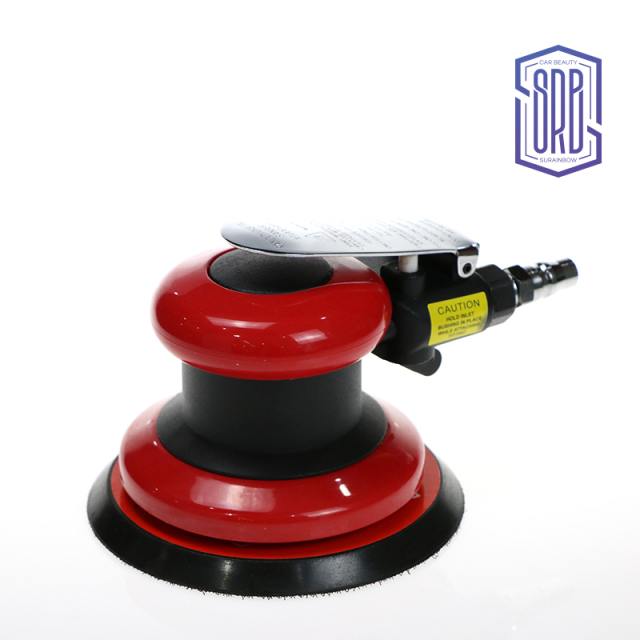
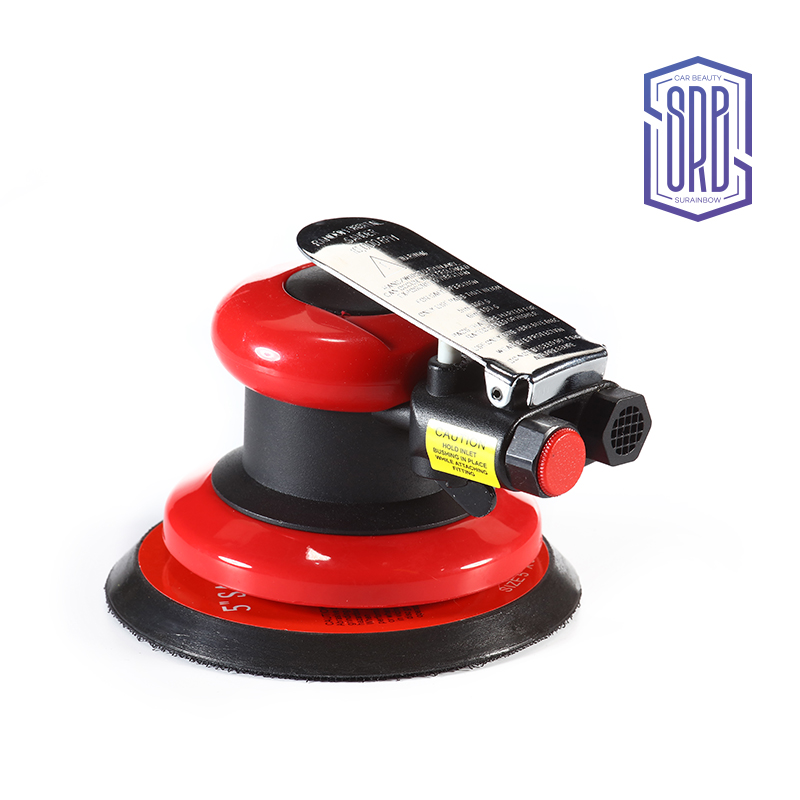
The T-312 is a hand-held pneumatic waxing machine for cars, built for the finishing end of the job: laying wax or finishing polish in an even film, working it down to a clear gloss and buffing the residue off paint, bumpers, pillars and wheels. It is compact and lever-operated, the kind of tool a technician holds in one hand and steers along a body line rather than wrestling across a panel.
As a pneumatic waxing machine manufacturer working out of Guangzhou, we build this model for two kinds of buyer: the detailing shop that wants a dependable finishing tool on every bay, and the distributor or private-label brand that needs the same unit to arrive with consistent packaging and paperwork. The machine is identical for both — what changes is the label on the box and the size of the run.
Most shops use a tool like this after compounding, not instead of it. Correction work, meaning sanding marks and heavy oxidation, still needs a slower, heavier machine and a cutting compound. This unit picks up from there and turns a sound but dull panel into a finished one. Buyers who expect it to take out deep scratches in a single pass are the ones who end up disappointed.
Buying from a car polisher supplier that also stocks the pads, compounds and waxes matters more than it sounds. A backing pad that does not suit the machine wastes a day; a wax that fights the pad wastes a panel. Everything this tool runs on sits in the same catalogue, so a shop can order the machine and its consumables on one document instead of three.
Key Features
- A 2000 rpm no-load speed that stays usable. The pneumatic car polisher 2000rpm rating is measured free-running, so under light finishing pressure the pad keeps a steady, controllable speed — quick enough to spread a wax film evenly, slow enough that the head follows a character line instead of skating across it.
- 810 W of working power. An 810w car waxing machine that holds speed when the pad loads up is the difference between an even finish and a set of swirl marks; the drive keeps pulling once product starts to sit on the pad, so the operator does not have to lean on the tool to compensate.
- A pad platform sized for tight work. The backing pad is deliberately small, which is an advantage here: it reaches bumpers, mirrors, pillars and door edges that a large-diameter polisher cannot touch without masking half the panel first.
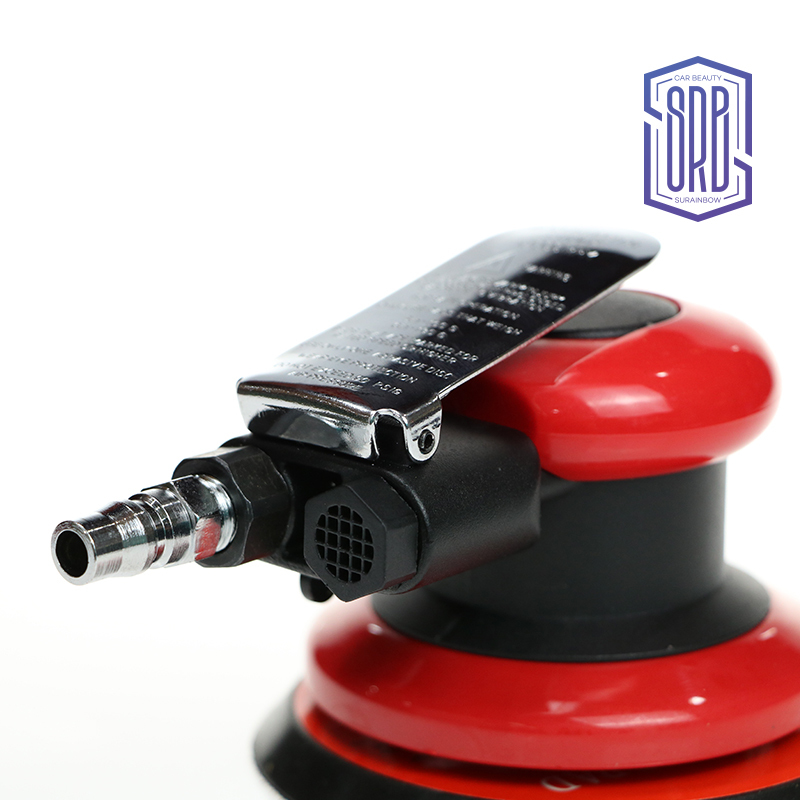
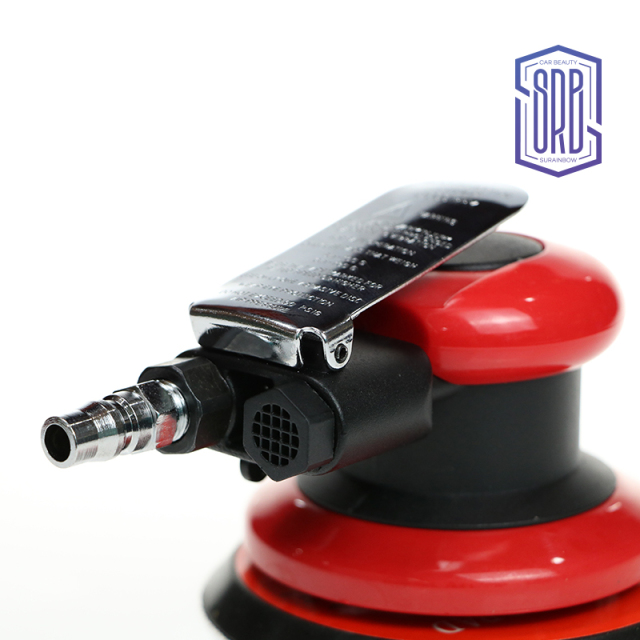
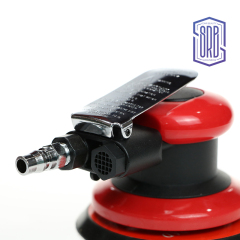
- Lever throttle with an on-body regulator. Speed and air volume are set with a thumb and a free hand. There is no menu, no lock-release sequence and no peeling a glove off in the middle of a panel.
- Balanced for one-handed running. The body sits close to the hand, so a technician can work along a roof rail one-handed and pass the tool to a new starter without a week of arm ache.
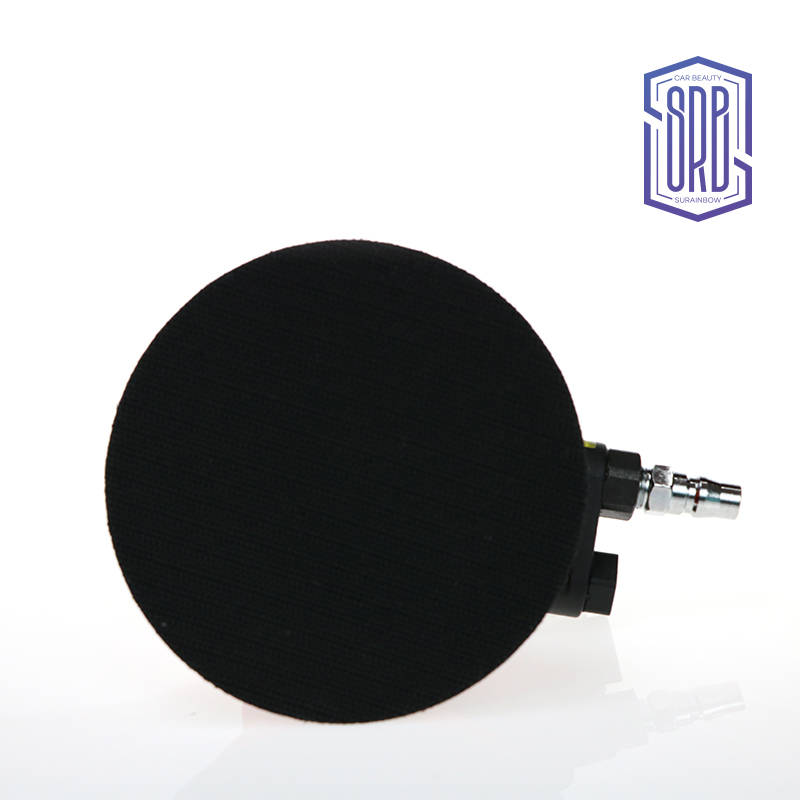
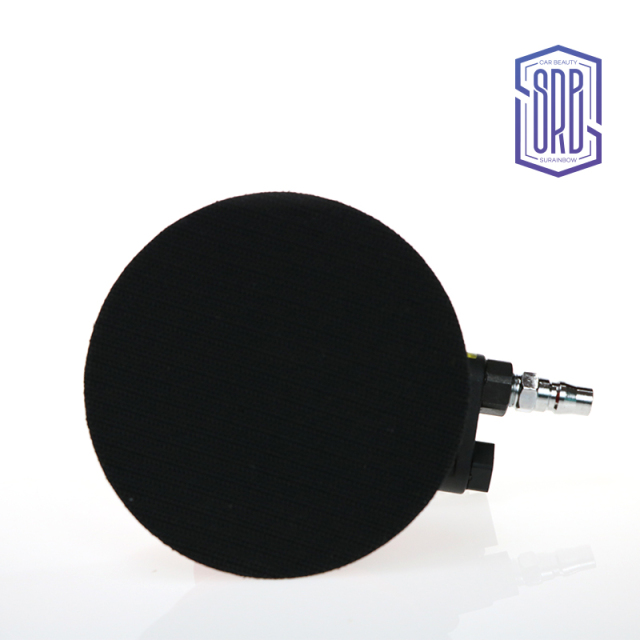
- Pads change by hand. The foam or wool pad presses onto the backing pad and pulls off again, so a fresh pad goes on between panels without a spanner, a chuck key or a walk back to the bench.
- Consumables from the same place. Pads, compounds and waxes sit in the same range as the machine, so a shop buying from one car polisher supplier restocks the tool and everything it burns through on a single order.
Power, Air & Setup
- Settle the supply question first. The record for this model lists a mains voltage and a power rating, and the tool body also carries an air inlet with a side regulator. Before you order, tell us whether your bay runs a car waxing machine 220v supply or a compressed-air line, and we will confirm the configuration that ships to you.
- Do not assume the two are interchangeable.
- Choose the pad before you choose the panel. A soft foam pad suits wax and a light finishing polish; a firmer pad holds up better when the operator is working a full bonnet. Fitting the wrong pad costs more time than fitting the right one.
- Seat the pad flat. On a 110 mm car polisher the pad presses onto the backing pad by hand; check that it is centred and that no edge has lifted before the tool starts. An off-centre pad vibrates through the whole body and leaves marks you will spend longer removing than fitting the pad took.
- Start at a low setting and build up. Open the supply, begin gently and run one panel. Increase only if the pad stalls under light hand pressure — most waxing and finishing work happens well below the tool's upper range, and the finish improves when the operator stops earlier.
- Pack consumables with the machines. On a car waxing machine wholesale order going to several branches, put a set of pads and a matching wax or finishing compound in with each unit, so no branch is short on the day the tool arrives.
- Brief the operator before the first car. Two minutes on pad choice, product quantity and overlapping passes saves a bonnet, and it is the difference between a tool that gets used and one that sits on the shelf.
Workshop Applications
The obvious job is the one on the box: a full wax service on a passenger car. The technician works panel by panel — roof, bonnet, upper doors, then the lower panels — laying an even film, letting it flash and buffing with a clean pad. On a busy Saturday the pneumatic car polisher 2000rpm unit earns its place because the head never stops to wait for a battery or to untangle a cord from a wet floor.
Pre-delivery prep at a dealership is the same process run at volume: dozens of cars a week, each needing a quick, uniform finish before handover. Shops doing that work buy in bulk, and they tend to buy everything from one car polisher supplier, because a mismatched pad or a wax that behaves differently between batches costs more in rework than it ever saves on the unit price.
Distributors and e-commerce sellers use the machine differently again. For them it is a catalogue line: the car waxing machine 220v version has to photograph well, ship safely and carry a specification sheet a buyer can compare. A car waxing machine wholesale programme usually pairs the tool with pads, compounds and waxes, so the end customer can buy a complete first kit instead of a bare machine.
Private-label buyers take it a step further. As a pneumatic waxing machine manufacturer we quote the model with your artwork on the colour box and your label on the housing, run a sample for your approval, and hold that approved version as the reference for the bulk run.
Around those four there is the everyday work: used-car reconditioning before a forecourt photo shoot, wheel and exhaust-tip finishing, and the quick maintenance wax a regular customer books between full details. None of it needs a heavy correction machine, and all of it benefits from a tool that starts the moment the thumb goes down.
Operating Technique & Pad Care
- Hold the tool flat, keep it in motion and let the pad do the work — pressing harder slows the pad, heats the panel and buys nothing.
- Load the pad lightly. Two or three pea-sized drops of wax or finishing polish are enough for a door. An 810w car waxing machine will keep spreading whatever you put on the pad, and an overloaded pad flings product into shut lines and textured trim where it is awkward to remove.
- Match the pad to the panel.
- Soft foam for wax, firmer foam for a finishing polish.
- The 110 mm car polisher size keeps the pad small enough to follow a swage line without touching the trim beside it, which is exactly why it suits bumpers and pillars.
- Work in overlapping passes and tape what you care about.
- Move in a grid across each panel with a modest overlap, and tape sharp edges, badges and plastic trims before you start rather than polishing around them.
- Clean the pad between panels.
- Brush or blow out dried product before it hardens; a glazed pad stops cutting and starts smearing, and a workshop will blame the machine for a pad that needed cleaning ten minutes earlier.
- Store the tool dry and keep a spare pad on the shelf.
- Wipe the housing, let the backing pad dry face-up and hang the tool clear of the floor.
- One spare pad per machine turns a worn pad from a lost afternoon into a two-minute change.
Specifications
| Property | Detail |
|---|
| Model | T-312 |
| Type | Pneumatic car waxing and polishing machine |
| Power rating | 810 W |
| Voltage | 220 V |
| No-load speed | 2000 rpm |
| Disc diameter | 110 mm |
| Body dimensions | 25 × 8 × 11 cm |
| Unit weight | 1.18 kg |
| Housing colours | Black, red |
| Control | Lever throttle with side air regulator |
| Certification | CE, as listed for this model |
| Warranty | 1 year, as stated for this model |
| Place of origin | Guangdong, China |
Sampling & Approval
- Send the brief. Tell us the panels you finish, the wax or finishing polish you run, your market and the quantity you have in mind. As a pneumatic waxing machine manufacturer we quote from that brief rather than from a catalogue photo, because the pad and product pairing decides what the tool will actually do.
- Test on your own supply. Run the sample unit the way your bay actually runs.
- Record what you approve. Note the pad, the product, the regulator setting and the result on a scrap panel. That written note, together with the sample unit, becomes the reference the bulk order is checked against.
- Confirm colour and artwork together. Choose black or red, approve the label text and the colour box artwork, and keep a signed proof. Artwork left to the last week is the usual reason a machine shipment slips.
- Run bulk against the sealed reference. For a car waxing machine wholesale order, the approved sample is sealed and held as the acceptance reference, so a branch in another country can compare what arrives with what was signed off.
- Keep the batch traceable. Order reference, production run and inspection notes stay on file. If a unit later behaves out of character, quote the batch details and we can check it against the run that produced it and against the units still in stock, and handle the warranty question on that basis.
Packing & Ordering Details
| Item | Detail |
|---|
| Minimum order | 100 pcs per model |
| Selling unit | Single unit |
| Inner packing | 1 pc per colour box |
| Colour box size | 27 × 8 × 11 cm |
| Parcel weight | 0.5 kg |
| Housing colour | Black or red, specified on the order |
| Branding | SURAINBOW label or OEM artwork |
| Certification | CE, as listed for this model |
| Warranty | 1 year, as stated for this model |
| Stock status | In stock and fast shipping |
| Payment | Terms, currency and balance schedule confirmed on the quotation |
| Documents | Commercial invoice and packing list with each shipment |
Scale & Supply Capability
SURAINBOW is run by Guangzhou Liangdian Automotive Supplies Co., Ltd., a factory-trade operation set up in Guangzhou in 2010 and now 50 people strong. Sixteen years in car care have given us a one-stop supply position: our own SURAINBOW lines are held in stock for fast shipping, and an associate factory with modern production equipment and an established quality management system keeps replenishment moving. We take OEM and ODM work and our R&D team develops to your specification. Buyers in the Middle East, the United States, Southeast Asia, Europe, the UK, Russia, Africa and Australia already order from us.
FAQ
What pads fit this machine?
Pads in the 110 mm car polisher size seat directly on the backing pad: a soft foam pad for wax, a firmer foam or short wool pad for a finishing polish, and a microfibre pad if your technicians prefer one. Match the pad diameter to the backing pad rather than running an oversized pad, which overhangs the edge and marks trim. If you are unsure which pad suits the product you already use, send us the product name and we will suggest a pairing.
How does the 2000 rpm speed behave once the pad touches paint?
The pneumatic car polisher 2000rpm figure is a no-load rating, so the pad turns at that speed before it meets the panel. Under normal finishing pressure it settles into a slightly lower, steady speed, which is what you want for wax: a pad still spinning at full speed after the product has flashed simply smears it. If you need the head slower, trim the regulator rather than pressing harder.
Will one machine keep up with a full day of waxing?
On a normal bay, yes. A pneumatic waxing machine for cars has no battery to recharge mid-shift, so the tool keeps running as long as your bay supply does and the limit becomes the operator, not the equipment. Plan on one unit per working bay plus a spare backing pad; if two technicians share a tool, add a second so nobody is waiting at a drying panel.
What does the 810 W rating mean in practice?
The 810w car waxing machine figure describes how much work the drive can do before it starts to slow, which is why the pad keeps turning when it is loaded with wax on a large flat panel. It is not a measure of how fast you should move. The finish still comes from a light product load, an even overlapping pass and a clean pad.
Will it run on the supply in my workshop?
The product record lists a 220 V supply, and the tool body also carries an air inlet and a side regulator, so confirm with us before you order rather than assuming. A car waxing machine 220v configuration suits workshops on a 220 V mains supply; if your bay runs on compressed air instead, tell us and we will check which configuration is available for your order. The two are not interchangeable.
How is this different from a rotary polisher?
A rotary spins the pad on one fixed axis. It cuts quickly but needs an experienced hand to avoid holograms and edge burns. This unit lets the pad run free over the panel, which makes it far more forgiving for wax and finishing polish work; the trade-off is that it will not remove deep defects on its own. Most shops keep a rotary or a gear-driven machine for correction and use this one for the finish.