Guangzhou Liangdian Automotive Supplies Co., Ltd.
Guangzhou Liangdian Automotive Supplies Co., Ltd.

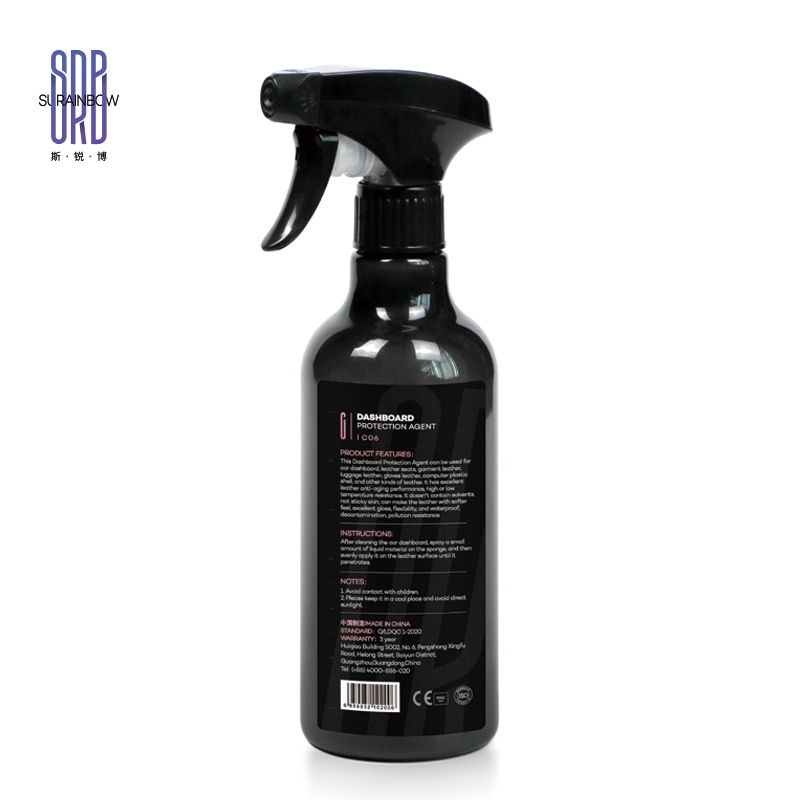
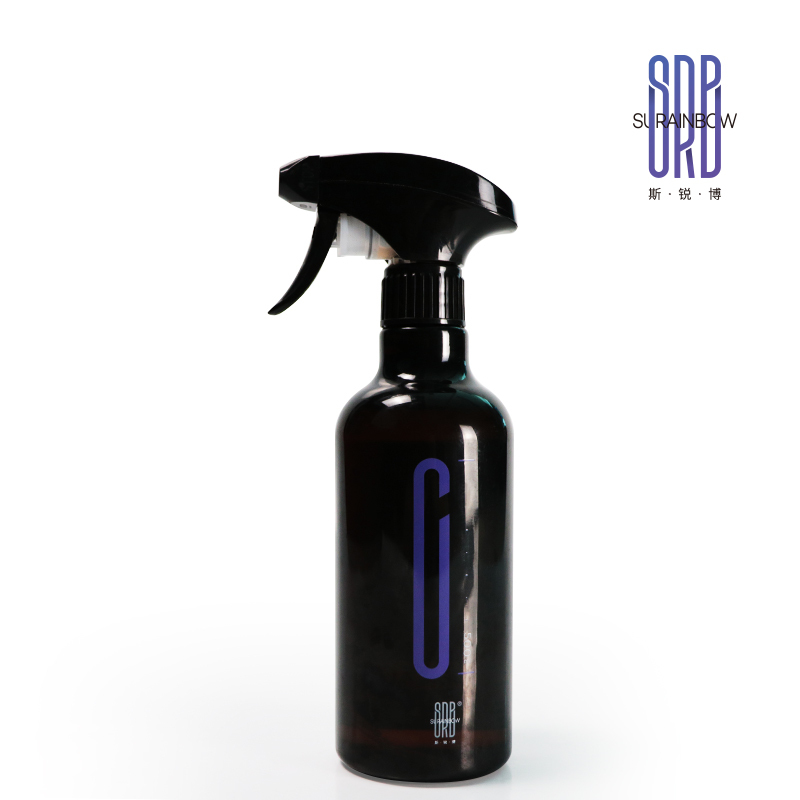
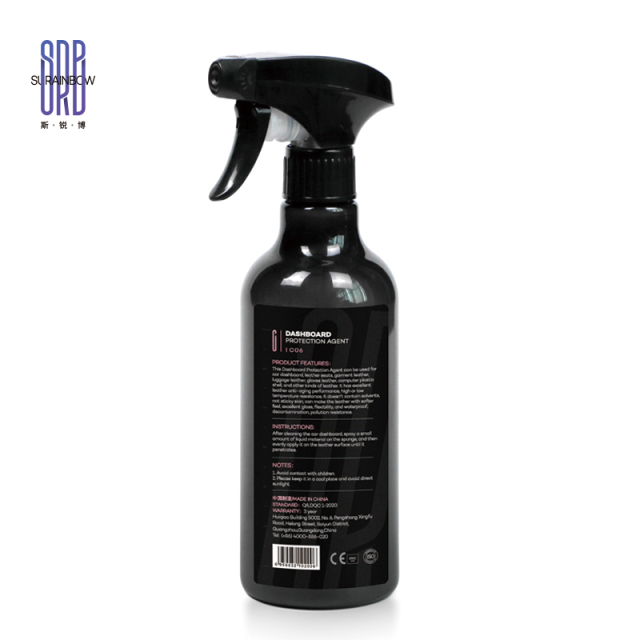
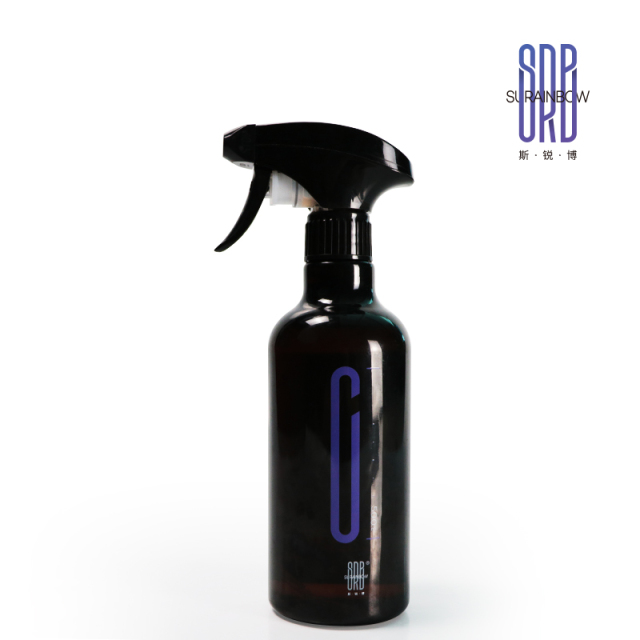
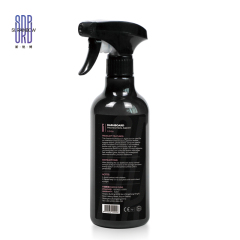
A 500 ml trigger-spray bottle of dashboard protection agent, No. C-06, is worked into the dash pad through a sponge rather than sprayed wet onto the panel — the label method is a small amount of liquid on the applicator, applied evenly until the surface takes it in. That detail matters on a dashboard, where overspray reaches glass, vents and switches long before it reaches the trim.
One bottle is listed for the dashboard, leather seats, garment leather, luggage leather, gloves leather, computer plastic shells and other leathers, which says a lot about how mild the liquid is. Nothing in the method is aggressive: the surface is cleaned first, then given a thin, even layer.
Detailers use it as the finishing step of an interior job, once the cleaner has lifted the soil; shops that also sell leather goods run the same bottle over bags, jackets and gloves, so one 500 ml unit covers the car and the counter.
For a distributor or an own-brand program, the 500 ml spray is a trade-ready unit: fitted trigger head, printed instruction label on the back, and a size that suits counter sales as well as workshop use. We fill it under SURAINBOW and work as a dashboard protection spray supplier to detailing chains, importers and private-label buyers, so the same formula can go out under your label.
Car dashboards and dash pads are the primary application: vinyl, leatherette and finished plastic dashes are cleaned, then given an even coat with a sponge, working around vents, seams and stitching. Leather seats take it as a leather seat protection spray once they are cleaned and dried, and a thin layer keeps the hide from looking dry between full details. Garment leather such as jackets, coats and fashion trims comes back to a deeper colour where it has gone dull; test a hidden panel first. Luggage leather is on the same list — suitcases, briefcases and travel bags — which makes the bottle relevant to leather-goods distributors as well as car workshops. Gloves leather, driving and work gloves included, can be treated with a sponge so the liquid stays on the outside and out of the lining. Computer plastic shells are covered too, so plastic casings on desk equipment and hardware housings can be finished with the same product as the car trim. Other kinds of leather — handbags, belts, shoes — fall under the general note on the pack, and dyed or uncoated finishes need a patch test before the whole item is treated.
Dashboard plastics and leather age faster than the rest of the interior: sun through the windscreen, heat from the vents and the daily warm-cool cycle draw the oils out of the surface until it looks chalky and feels dry. The formula is built around that cycle, with anti-aging performance and resistance to both high and low temperatures — the practical requirement in a Gulf-summer cabin and a cold-climate winter alike.
Because this is a solvent free leather protection spray, it can sit inside a maintenance routine rather than being a one-off treatment: seats and trim can be re-coated during a regular interior service without a solvent load building up on the finish.
On the surface, the result is a soft feel rather than a slick film. The liquid is not sticky on the skin, so a driver who rests a hand on the dash or slides across a leather seat does not pick up tacky residue, and the leather keeps a natural, supple hand.
Gloss is part of the brief: the spray leaves an even sheen that lifts faded trim back to a cared-for look without the wet, mirror-like finish of a heavy dressing. Treated leather bends and creases without the surface going stiff.
Water behaviour is the other half. Treated panels shed water and wipe clean more easily, so a coffee splash or rain through an open window sits on the surface instead of soaking in. The same resistance works against pollution: road film, dust and exhaust haze lift with a damp cloth at the next wash, which means fewer deep cleans over the life of the interior.
| Specification | Detail |
|---|---|
| Product name | SRB Dashboard Protection Agent Spray |
| Item number | C-06 |
| Capacity | 500 ml |
| Pack format | Trigger-spray bottle with printed instruction label |
| Solvent content | Solvent free |
| Lead application | Car dashboard and interior trim |
| Additional surfaces | Leather seats, garment leather, luggage leather, gloves leather, computer plastic shells and other leathers |
| Feel on the surface | Non-sticky, softer leather hand |
| Finish | Even gloss with flexibility |
| Temperature behaviour | Made for high and low temperature resistance |
| Water and soil behaviour | Waterproof, with decontamination and pollution resistance |
| Brand | SURAINBOW |
| Country of manufacture | China |
Finished automotive leather, vinyl dash pads and hard plastic trim take this spray without trouble; the surfaces that need a patch are the uncoated ones. A solvent free leather protection spray is the safer starting point for coated and pigmented leather because there is no solvent load to lift the finish, but leather covers a wide range of tannages and one bottle cannot promise the same result on all of them.
Aniline and unsealed leather can darken, suede, nubuck and Alcantara have a nap that a liquid will flatten, and perforated seat panels let product into the holes and the foam underneath. White and pale leather deserves a patch first, because any change in depth shows immediately.
Run the test somewhere out of sight — under the seat, behind a headrest, inside a bolster — apply a small amount, let it settle, then check colour and hand before the whole panel is treated.
Plastic trim is usually straightforward, but keep the product off glass, instrument lenses and screens, where a thin film catches light and looks like a smear.
If you are working on a material you have not treated before, send us the surface type and a photo of the worn area; we will tell you what we would test and how.
A sample of the current batch, evaluated on your own dashboard material and seat leather, settles questions a photo cannot — how deep the gloss reads under your lighting, how the leather feels an hour after application, whether the colour shifts on your trim. Tell us the surfaces you will test, the market the product is going to and the pack you are considering, and ask for the current sample terms when you do.
Testing is more reliable when the criteria are written down before the first application. Agree what counts as a pass — gloss level, dry feel, absence of tack, no colour transfer onto a white cloth — and record the conditions, because a result judged in a cold workshop is not the same as one judged in a hot bay.
Once you approve, the sealed sample becomes the reference for the bulk run. It is the physical standard a later delivery is compared with, and it is what lets a leather protection spray manufacturer answer a question about a past batch with something more than a description.
If your market needs performance test evidence, third-party reports or a specific safety data sheet, raise it at the sample stage; what can be supplied is confirmed against the destination market and the order rather than assumed.
A safety data sheet is issued against the fill and the destination market: the classification entries, the format and the language differ between the Gulf, Southeast Asia and the United States, so ask for the version that matches the country on your order rather than a generic copy. The label declares the formula solvent free. Where your market asks for an ingredient declaration or a composition statement to support a listing, raise it at the sample stage so the paperwork and the fill are approved together. Anti-aging performance, high and low temperature resistance, waterproofing and pollution resistance are formula behaviours. If a claim needs a third-party report behind it, agree the test scope first — which property, on which substrate, to which standard — before the run is booked. Air and sea bookings need the transport classification before a forwarder can quote; that entry travels with the technical file and cannot be read off the bottle size or the front label. Market-specific label content — caution wording, importer block and language — is fixed during artwork approval, and the documents that travel with the shipment follow the same country list. A one-page product data sheet covering capacity, item number, declared surfaces and storage is what distributors use for their own listings and for training counter staff; ask for it in the language you sell in. Tell your sales contact which markets the goods are going to and which documents your forwarder and customs broker ask for. That list decides what travels with the shipment and what stays on file for the next order.
Each bottle carries a batch reference, and retained samples from that run are kept at the plant, so a question about a carton can be traced back to the fill it came from and compared with the reference the customer approved. That is how a leather protection spray manufacturer should answer a complaint — with a physical sample and a record behind it.
Report a problem with the batch number, the quantity affected, photographs and a short note on how the product was stored and used; those details are what make a comparison possible. Leakage, shortage or a damaged carton should be reported as soon as the goods arrive, while the shipment paperwork is still to hand, and a quality concern is reviewed against the approved sample and the retained reference from the same run.
Where a batch does not match, the review covers the fill, the label version and the carton specification, and the outcome is recorded so the next run starts from a corrected instruction instead of repeating the same fault. Records from earlier orders are kept for exactly this purpose: a repeat buyer should not have to explain the history again.
| Point | 500 ml dashboard spray | 4-litre leather protector |
| Pack format | 500 ml trigger-spray bottle, worked in through a sponge or applicator pad | 4-litre bulk container, decanted into workshop bottles or sprayers |
| Lead surface | Dashboard, interior trim and hard plastic first, then seats and small leather goods | Leather upholstery and leather goods |
| How protection works | Solvent free liquid that settles into the surface and leaves a soft hand with even gloss | A dense, ultra-thin silicone protective film formed on the surface of the leather |
| Stated finish | Softer feel, gloss, water and soil resistance | Softer and brighter leather, with wrinkle recovery and anti-stick behaviour |
| Chemistry | Solvent free, so no solvent load builds up on coated finishes | Free of phenol and of acid and alkali substances |
| Can one replace the other? | No — the trigger top and small volume are built for panel-by-panel interior work | No — a full leather job needs the bulk volume and a decanting step before use |
| Where it fits your assortment | Counter units, single-car details and mixed orders that ship with other interior-care items | Volume leather work, refill programmes and shops treating leather every day |
| Why stock both | Covers dashboards and trim, which the bulk leather product does not lead with | Covers the volume leather task without tying up trigger bottles on every seat |
We are Guangzhou Liangdian Automotive Supplies Co., Ltd., an integrated manufacturing and trading company founded in Guangzhou in 2010. With 50 employees, we supply a broad range of car care products to distributors, wholesalers and brand owners. Our range lets you source across categories through one supplier, with in-stock options and fast shipping. Alongside our SURAINBOW brand, we offer OEM/ODM customization, supported by a professional R&D team that can design and develop products around your requirements.